
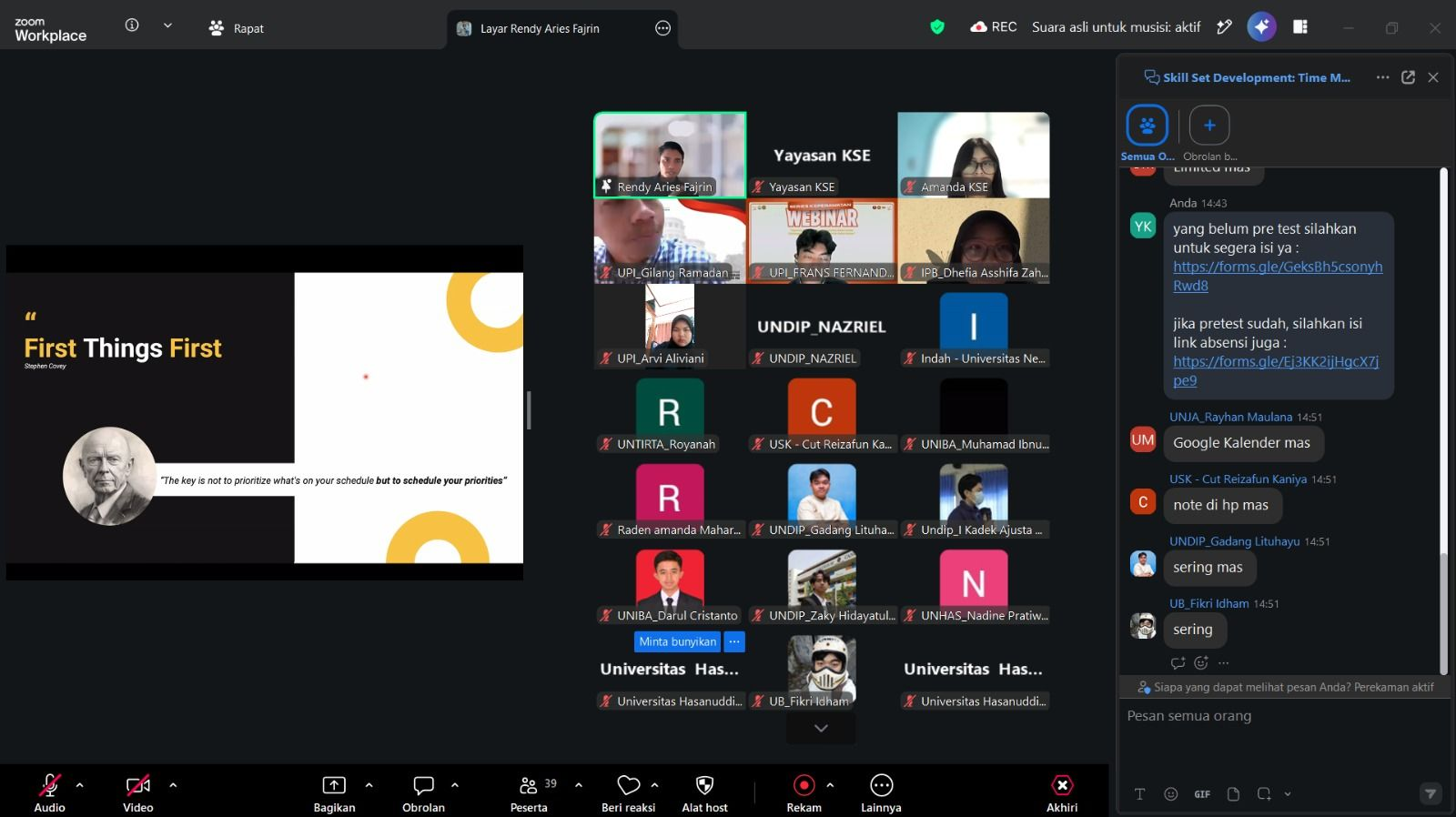
Jakarta, August 29, 2026 – Yayasan Karya Salemba Empat (KSE) once again organized Skillset Development Part 2, focusing on the theme of “Time Management.” Held online via Zoom, the session aimed to equip KSE scholarship recipients with the skills to manage their time, set priorities, and develop more effective work habits.
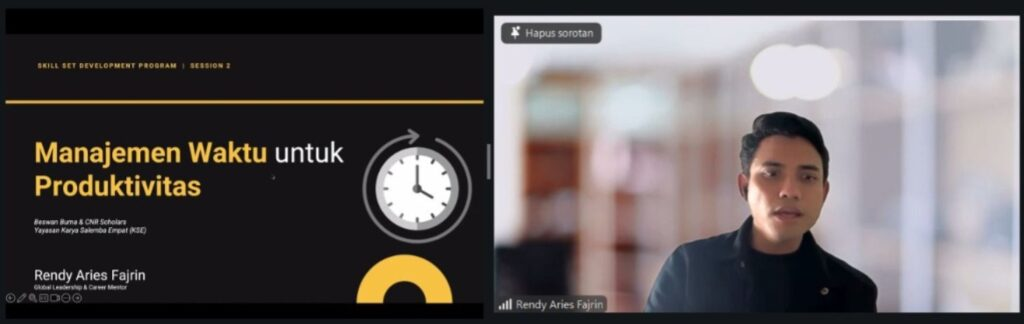
This session featured Rendy A. Fajrin, Global Leadership & Career Mentor and KSE scholarship alumnus, as the speaker. Drawing on more than 10 years of cross-industry experience in Culture Transformation, Talent Management, and Leadership Development, he shared practical insights and approaches that KSE scholarship recipients could apply when managing their academic and non-academic responsibilities.
At the beginning of the session, participants completed a pre-test and revisited the previous session’s topic, Growth Mindset, connecting its key lessons to the discussion on Time Management.
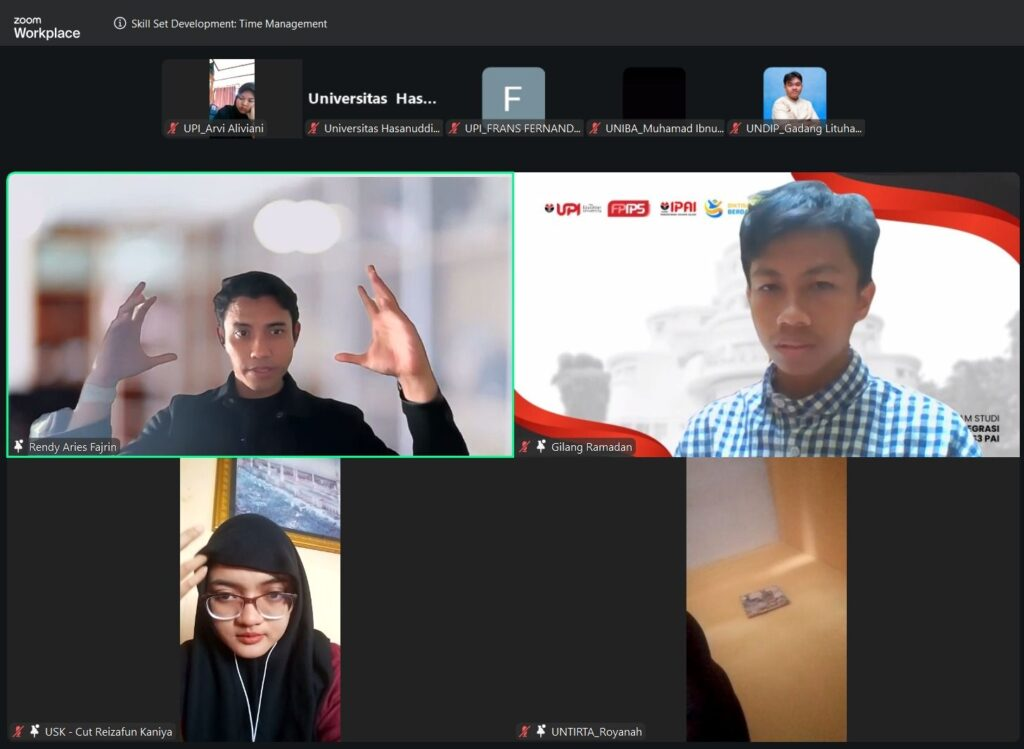
During the main discussion, Rendy encouraged participants to reflect on how they perceive and value time. The discussion became interactive as participants explored whether time is truly limited or can sometimes feel unlimited. Through this discussion, they were guided to understand that the main challenge is not simply having enough time, but allocating it to activities that are meaningful and aligned with their goals.
One of the tools introduced was the Eisenhower Matrix, which helps participants categorize activities based on their level of importance and urgency into four categories: important and urgent, important but not urgent, urgent but not important, and neither important nor urgent.
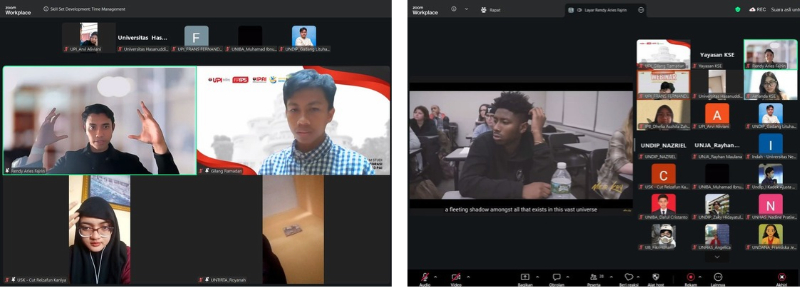
Academic activities, student organizations, event committees, personal development, and career preparation may each require different levels of priority. Therefore, participants need to develop the ability to identify which activities deserve their primary attention.
The discussion also covered monotasking and multitasking. Participants shared their experiences and preferences when completing tasks. Rendy explained that, from a scientific perspective, multitasking often involves rapidly shifting attention from one task to another, rather than fully performing several tasks simultaneously. Participants were therefore encouraged to understand their individual work styles and identify the approaches that work most effectively for them.
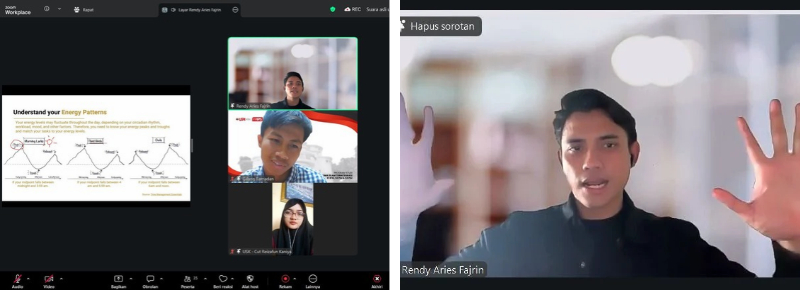
To reinforce their understanding, participants took part in an interactive quiz, a question-and-answer session, and a post-test.
As a follow-up to the session, KSE scholarship recipients were encouraged to put several simple practices into action, including mapping out weekly priorities, implementing time blocking, developing habits to overcome procrastination, and conducting weekly reflections.
“Time management is not about having more time, but about using the time available for the things that truly matter,” said Rendy A. Fajrin.